


You join a webinar, coffee in hand, ready to learn something new. The host greets everyone, shuffles through notes, and pauses too long. Without proper webinar script writing, attention quickly drifts, and the audience loses focus.
That’s why a webinar script is like having GPS for a presentation. Without it, there’s a risk of detours, forgotten points, or losing the audience halfway through. With it, the path is clear, the delivery confident, and the audience engaged.
A webinar script acts as a co-pilot. It doesn’t remove personality or spontaneity; it ensures the message lands smoothly and leaves a lasting impression.
This guide explores the essentials of webinar script writing, why it matters, the benefits, a ready-to-use template, and practical examples to help create a polished, professional webinar.
What is Webinar Script Writing?
Webinar script writing is the process of planning and organizing what you will say during an online presentation. It’s more than just a set of notes; it’s a structured plan that guides the flow from the opening hello to the final goodbye.
A good script is written with the audience in mind. It speaks their language, addresses their problems, and keeps them interested with smooth transitions. The best scripts sound natural when read aloud, almost like a friendly conversation.
Writing a script also helps reduce nerves. Knowing exactly what to say at each stage means fewer awkward silences and more time spent connecting with listeners. It’s the backbone of a webinar that feels polished without being stiff.
Whether the goal is to teach, sell, or inspire, a well-prepared script ensures the message comes across clearly. And the more thought that goes into it, the more professional and engaging the webinar will feel.
Benefits of Having a Webinar Script
A webinar without a script can feel like driving without a map; you might reach the destination, but it will take longer, and the journey might be bumpier than necessary. A script gives direction, confidence, and a professional edge.
Here are the main benefits:
Keeps the session organized
A script ensures the content flows logically from one topic to the next, so the audience never feels lost.
Reduces stress
Knowing exactly what to say at each stage eases the pressure and helps avoid awkward pauses.
Improves timing
Scripts help stick to the schedule, making sure there’s enough time for Q&A, stories, or demonstrations.
Boosts audience engagement
Planned interactions like polls, questions, or short stories can be written into the script to keep energy high.
Increases confidence
When the message is clear and rehearsed, delivery feels smoother, which makes the audience trust the speaker more.
With these benefits in mind, it’s easy to see why webinar script writing is an essential part of preparation.
Webinar Script Template
A good script template is like a ready-made frame; you just fill in the details, and the structure keeps everything neat. The goal is to make the webinar flow naturally while still hitting all the important points.
Here’s a simple webinar script template you can adapt for any topic:
Greeting & Welcome
Warmly welcome attendees, thank them for joining, and set a positive tone.
Introduction of Topic & Speaker
Briefly introduce yourself, your expertise, and what the webinar will cover.
Agenda Overview
Outline the key points or sections so participants know what to expect.
Main Content
Break the topic into clear segments, with stories, examples, or visuals to keep interest high.
Engagement Breaks
Add polls, questions, or interactive moments to maintain energy.
Case Studies or Examples
Share real-life stories or scenarios that make the content relatable.
Recap & Key Takeaways
Summarize the most important points to reinforce learning.
Call-to-Action (CTA)
Tell attendees what to do next: sign up, download, or apply what they learned.
Q&A Session
Answer questions, address concerns, and clarify anything that came up.
Closing Remarks
End on a warm note, thank everyone for attending, and remind them of your CTA.
This template works as a checklist and a safety net, keeping your delivery focused without feeling rigid.
How to Write a Webinar Script?
Writing a webinar script begins with clarity; knowing exactly who you’re talking to and what you want them to take away. Without this foundation, the rest of the planning can feel scattered. The more you understand your audience, the easier it becomes to choose the right words, examples, and tone.
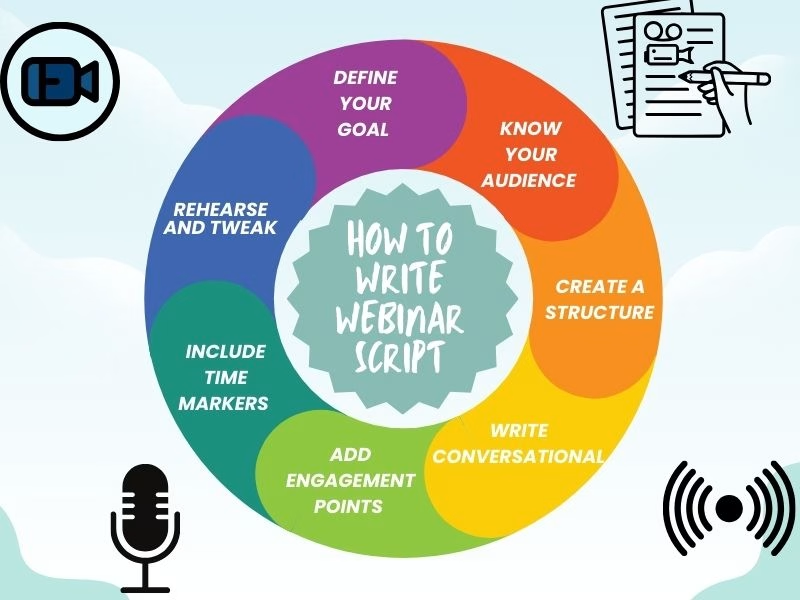
Here’s a step-by-step way to make the process smooth and stress-free:
Define your goal
Decide if the webinar’s main purpose is to teach, inspire, or sell. Your goal shapes the language, pace, and call-to-action at the end. For example, a sales-focused script might include more benefits and success stories, while a teaching-focused one might include more step-by-step explanations.
Know your audience
Research who they are, what they need, and what problems they’re trying to solve. Speaking directly to their challenges makes the session feel personal and valuable.
Create a structure
Use the webinar script template as your foundation. Break your content into manageable sections so it’s easy to follow. A clear flow keeps you from jumping around and confusing your listeners.
Write conversationally
Avoid jargon unless it’s common in your audience’s world. Use short sentences and a friendly tone so it feels like you’re talking with someone, not at them.
Add engagement points
Plan moments for interaction: questions, polls, quick chats, or short exercises. These breaks keep the energy up and prevent the dreaded “silent audience†feeling.
Include time markers
Estimate how long each section will take, and leave a buffer for interaction or unexpected questions. This helps you finish on time without rushing through key parts.
Rehearse and tweak
Practice reading your script out loud, preferably more than once. If something sounds unnatural or stiff, rewrite it until it feels like it could roll off your tongue during a casual chat.
A well-written script is like a safety net; it supports you without limiting your personality. You get the freedom to engage naturally, knowing the framework will keep you on track.
Webinar Speech Script vs. Webinar Presentation Script
| Webinar Speech Script | Webinar Presentation Script |
| Written word-for-word for exact delivery | Uses bullet points or short prompts as a guide |
| Best for formal events, launches, or high-stakes talks | Best for casual, interactive, and flexible sessions |
| Ensures consistency in every delivery | Allows adaptation based on audience reactions |
| Reduces the chance of forgetting important details | Encourages a conversational and dynamic tone |
| Ideal for speakers who prefer a fixed plan | Ideal for speakers who enjoy improvisation and storytelling |
Some hosts even combine both, using a speech script for the opening and key selling points, and a presentation script for Q&A or discussion sections. This hybrid approach offers both structure and flexibility.
Conclusion
A successful webinar doesn’t happen by accident; it’s the result of preparation, clear structure, and an understanding of your audience. That’s where webinar script writing becomes your greatest ally.
From keeping the flow smooth to building confidence, a good script ensures your ideas land exactly as intended. Whether you choose a detailed speech script, a flexible presentation script, or a mix of both, the key is to create something that supports you while keeping your delivery natural.
Think of your script as more than words on a page; it’s your plan for guiding the audience through an experience they’ll remember. With the right preparation, you can focus less on “what comes next†and more on connecting, engaging, and delivering value.
Now it’s your turn; use the template, follow the steps, and craft a script that makes your next webinar your best yet.
FAQs
1. What is webinar script writing?
It’s the process of creating a structured script to guide the flow of a webinar.
2. Why is webinar script writing important?
It ensures clarity, engagement, and a professional presentation.
3. How to write a webinar script effectively?
Begin with a strong hook, introduction, and an overview of key takeaways.
4. What’s the best way to structure webinar script writing?
Divide it into an introduction, main content, interactive elements, and conclusion.
5. How should you end a webinar script?
Close with a recap, audience Q&A, and a strong call-to-action.









Leave a Comment